![[YMCA of Reading & Berks County LOGO SQ]](https://recliquecore.s3.amazonaws.com/imgs/ymca_logos/named_y/blue_purple.png)
![[YMCA of Reading & Berks County LOGO FULL]](https://s3.amazonaws.com/recliquecore/imgs/ymca_logos/named/blue_purple.png)
Ready for Kindergarten?
How Pre-K Counts Helps Kids Build Confidence Before the First Day
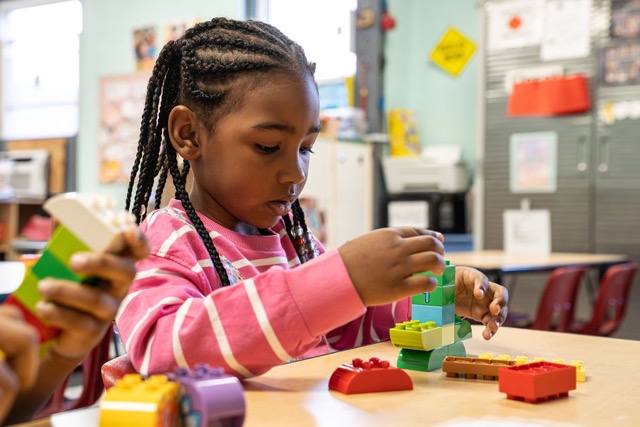
Starting kindergarten is a big moment. For kids, it can feel exciting, confusing, loud, fun, and a little scary all at once. For parents, it can bring a whole new set of questions.
You may wonder if your child will know how to follow a classroom routine, sit for story time, ask for help, make friends, or keep up with early learning skills like letters, numbers, shapes, and sounds. That is a lot to think about, especially when your child is still learning everyday things like putting shoes on the right feet, opening lunch containers, or using words when big feelings show up.
Kindergarten readiness does not mean your child has to walk into school already knowing everything. Children build readiness through practice. They need time with caring teachers, classmates, books, play, and the everyday rhythm of a preschool classroom.
Preschool gives children a place to practice those moments before kindergarten begins.
What Kindergarten Readiness Really Means
Kindergarten readiness is bigger than ABCs and counting. Those skills matter. Children benefit from recognizing letters, numbers, shapes, colors, and sounds. School readiness also includes learning how to move through a classroom day.
A child getting ready for kindergarten is learning how to listen during group time, share materials, wait for a turn, clean up after an activity, use words to express feelings, ask for help, and try again when something feels hard. None of that happens overnight.
Some children pick up routines quickly, while others need more time, more reminders, and more chances to practice. That is normal, and preschool gives children those chances in a setting built for their age, their energy, and their very real need to move, explore, and try again. Routines help kids feel safe. Young children do better when they know what to expect. In preschool, routines do more than keep the day organized. They help children feel safe enough to participate. When a child knows what happens after arrival, where to put their things, how group time works, and what to do when an activity ends, the classroom starts to feel less overwhelming.
A child who feels secure in the routine has more energy for learning, listening, playing with classmates, and trying new things. They are not spending the whole day guessing what comes next.
Early Literacy Starts Before Reading
For preschoolers, early literacy starts in much smaller ways. Children build reading readiness when they listen to stories, talk about pictures, hear rhyming words, learn new vocabulary, recognize letters, and begin connecting sounds with words.
A child does not need to read a book alone to be building literacy. When teachers read aloud, ask questions, sing songs, and encourage children to talk about what they see, children start to understand how language works. They learn that books have meaning and that letters and sounds connect. They learn that stories have a beginning, middle, and end. By the time kindergarten begins, books, letters, sounds, and classroom conversations already feel familiar, and that familiarity can make the first school year feel a little less intimidating.
Social Skills Matter Every Day
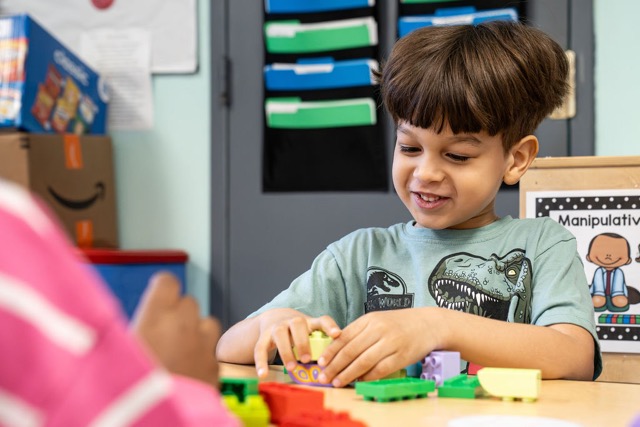
Kindergarten is full of people. That means children need practice being part of a group. They are learning how to share, wait, listen, solve small conflicts, use kind words, and understand that other children have feelings too. Sometimes a child needs help finding the words instead of grabbing, shouting, or shutting down.
Preschool teachers help children work through those moments. They guide children as they practice friendship, patience, empathy, and communication. They help children learn how to be part of a classroom community, even when feelings are big.
Children feel more comfortable in the classroom when they know the adults around them can understand and support them. For families who speak Spanish at home, bilingual staff can help children feel more included during the day. Hearing familiar language can make it easier for a child to follow directions, ask for help, and settle into the classroom without feeling left out because of a language barrier.
How Pre-K Counts at the Reading YMCA Helps
Pre-K Counts at the Reading YMCA Early Learning Center is a Keystone STAR 4 program that gives eligible families access to free, full-day preschool for children ages 3 to 5. During the school day they have steady practice with classroom routines, early literacy, early math, creative play, social development, and independence. The program includes lunch and two nutritious snacks each school day, which helps children stay fueled and ready to participate.
Children learn in ways that make sense for their age: through stories, songs, play, movement, conversation, classroom jobs, creative activities, and repeated daily routines helping children build skills they can carry into kindergarten.
Need care before or after the school day?
The Reading YMCA also offers Before & After School Care for children in kindergarten through age 12, with a safe, supportive environment where kids can learn, play, complete homework, and thrive before the first bell and after the last.
Pre-K Counts at the Reading YMCA connects families with early learning support close to home. At our Pre-K Application Days, parents can ask questions, get help understanding the application, meet staff, and get a clearer picture of what their child’s preschool experience may look like.
Learn more and start the 2026 to 2027 application at ymcarbc.org/prek.
About the YMCA of Reading & Berks County
For 167 years, the YMCA of Reading & Berks County has strengthened our local community through putting Judeo-Christian principles into practice with programs that builds healthy spirit, mind, and body for all. The YMCA of Reading & Berks County operates five branches in Adamstown, Mifflin, Reading, Sinking Spring and Tri Valley; two Early Learning Centers in Reading and Richmond; and seven transitional housing programs for residential care at the Reading Y and Camp Joy locations.
Driven by its founding mission, the Y is a nonprofit committed to strengthening the community and empowering individuals by ensuring access to resources, relationships and opportunities for all to learn, grow and thrive. By bringing together people from different backgrounds, perspectives and generations, the Y strives to improve overall health and well-being, ignite youth empowerment, and demonstrate the importance of connections among 2,700 Ys in 10,000 communities across the United States.